
Key Takeaways
- Rear Position Is Not Automatic Fault, but the Duty Sits There: Oklahoma's following-distance statute, 47 O.S. § 11-310(a), requires drivers to follow no "more closely than is reasonable and prudent," with due regard for speed, traffic, and highway conditions. The gap the trailing driver chose is the first thing examined, and for a loaded semi, a reasonable gap is a long one.
- Stopping Distance Shapes the Duty: The Federal Motor Carrier Safety Administration warns that large trucks and buses can need the length of up to two football fields to safely stop. Oklahoma's speed statute, 47 O.S. § 11-801, separately bars any driver from going faster than "will permit the driver to bring it to a stop within the assured clear distance ahead."
- A Commercial Driver's License Holder Is Required to Know This: Federal licensing rules make speed and space management required commercial driver knowledge: 49 C.F.R. § 383.111 lists "[s]peed and stopping distance" and "[s]pace cushions, e.g., controlling space ahead/to the rear" among the subjects commercial drivers must know. In bad weather, 49 C.F.R. § 392.14 adds a duty of extreme caution and reduced speed.
- The Gap Can Often Be Proven: Depending on the truck and how it is set up, its electronics may hold speed and braking data, some tractors carry forward-collision warning systems and cameras, and the driver's hours and dispatch records can show what the day looked like before the impact. Much of that evidence can be overwritten or discarded, and preserving it early is often the difference between arguing physics and proving what happened.
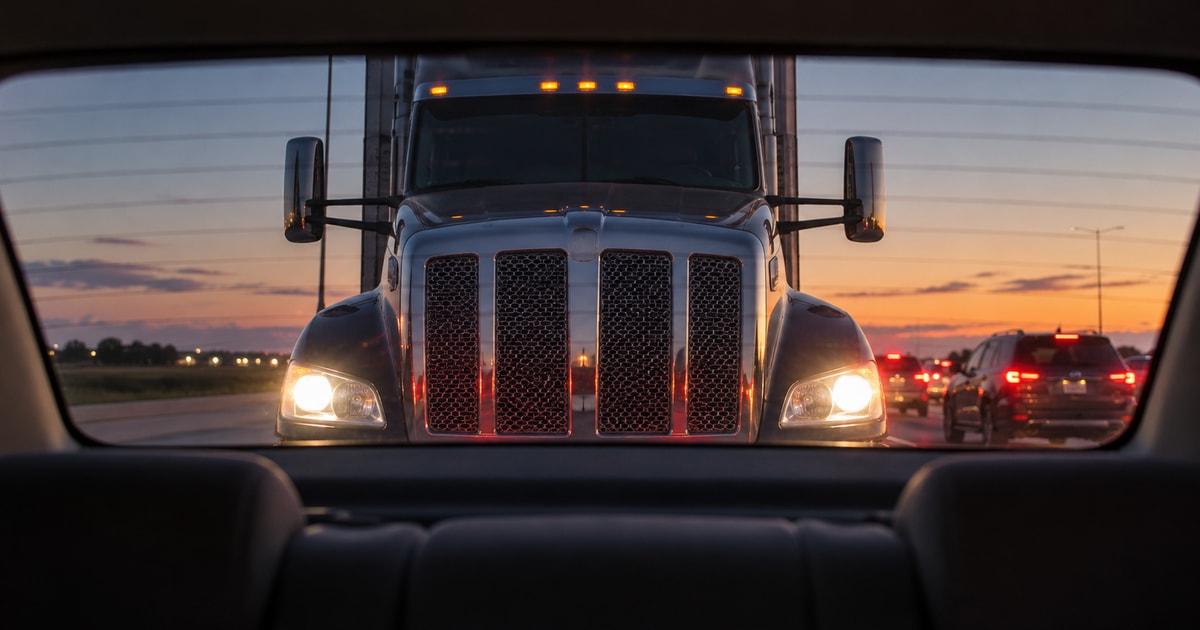
Being rear-ended by a semi-truck in Oklahoma puts the trailing driver's care at the center of the case, but it does not end the inquiry by itself. Oklahoma law requires drivers to leave a reasonable and prudent following distance for the conditions, and to travel at a speed that allows a stop within the assured clear distance ahead. For a fully loaded tractor-trailer, meeting those duties takes far more room than it does in a car. The first questions in a truck rear-end case are about the gap the driver kept, the speed the truck carried, and what the truck's own electronics and the carrier's records say about both. This article walks through the Oklahoma statutes, the federal rules that set the professional standard, the defenses carriers raise, and the evidence that can answer the question.
This article is general legal information, not legal advice. How these rules apply to a crash, and what its evidence shows, require an attorney's review of the facts.
Why a Truck Rear-End Crash Is Different From a Fender-Bender
A rear-end collision between two cars can still cause serious injuries. The same impact geometry with a tractor-trailer behind you is a different event, because the energy is different. A loaded combination vehicle can weigh many times what a passenger car weighs, and that mass has to go somewhere when the truck cannot stop. The Federal Motor Carrier Safety Administration puts the stopping problem in plain terms: large trucks and buses can need the length of up to two football fields to safely stop. Actual stopping distance depends on speed, load, brakes, tires, and road surface, so no single number fits every truck. But FMCSA's guidance describes large trucks as having "long stopping distances," and a professional driver is expected to plan for that.
The negligence question is not whether stopping was easy in the last second. It is whether the driver used reasonable care with speed and space before that moment. A rear-end case examines the following distance chosen, the speed carried into slowing traffic, and the attention paid to what was developing ahead. One note on terminology: this article covers trucks striking the rear of a smaller vehicle. The reverse crash, a car going under the back of a trailer, raises its own equipment rules and is covered in our guide to underride truck accidents.
What Oklahoma Law Requires of the Following Driver
Oklahoma's basic following-distance rule is one short sentence, and it is not limited to trucks, which is what makes it useful in a truck case. Under 47 O.S. § 11-310(a), the driver of a motor vehicle "shall not follow another vehicle more closely than is reasonable and prudent," having due regard for the speed of the vehicles, the traffic, and the condition of the highway. The rule sets no fixed number of feet. Because the test is what is reasonable and prudent for the speed, traffic, and road, a gap that is adequate in a sedan can be too short for a loaded semi that needs far more room to stop.
Oklahoma's speed statute supplies the second duty. 47 O.S. § 11-801 requires a "careful and prudent speed not greater than nor less than is reasonable and proper" for the conditions, and it forbids driving "at a speed greater than will permit the driver to bring it to a stop within the assured clear distance ahead." The assured-clear-distance rule is the one that does the work in rear-end cases: traffic ahead that is slowing or stopped is part of the distance ahead, and whether the truck could have stopped within it is the question the statute frames. The collision alone does not prove the rule was broken; whether it was depends on the speeds, distances, and conditions. How these statutes interact with the evidence in ordinary car-on-car collisions — including the cut-in and sudden-stop scenarios — is covered in our general guide to rear-end crashes in Oklahoma; this article is about what changes when the vehicle that failed to stop is a commercial truck.
A statutory violation is not automatic civil liability, and the rear vehicle is not liable in every rear-end crash. The statutes frame the questions; the answers come from evidence about what each driver did and could have done.
The Professional Standard: What a CDL Driver Must Know
Federal licensing rules make this problem part of a professional driver's required knowledge. Under 49 C.F.R. § 383.111, all commercial motor vehicle operators must have knowledge of listed subjects, including speed management, with "[s]peed and stopping distance" among its elements, and space management, "[t]he procedures and techniques for controlling the space around the vehicle," including "[s]pace cushions, e.g., controlling space ahead/to the rear." A carrier will have a hard time calling stopping distance a surprise to its driver.
Weather tightens the duty rather than loosening it. Under 49 C.F.R. § 392.14, a commercial driver must exercise extreme caution when hazardous conditions such as snow, ice, rain, fog, dust, or smoke adversely affect visibility or traction, must reduce speed, and must stop operating entirely if conditions become sufficiently dangerous. Rain or fog that lengthens stopping distance does not by itself excuse a rear-end impact; for a commercial driver, it is the condition the regulation told the driver to plan around. Carriers still raise weather as an unavoidable-accident defense, and Oklahoma courts have let juries consider that defense in an icy-road rear-end case, so the fight is over what the driver did once conditions turned bad. We cover how that rule operates in weather-related loss-of-control cases in our jackknife accident guide.
Distraction and fatigue also deserve attention. A driver looking at a phone may close a following gap without touching the brakes. The federal rules on devices are covered in our guide to truck driver cell phone and texting violations. A fatigued driver perceives and reacts late, which is why the hours-of-service rules and the driver's actual schedule deserve early attention in any crash where a truck failed to stop. Neither can be assumed. Whether either contributed to the crash depends on what the available evidence shows.
"You Stopped Short": The Defenses and Comparative Fault
Expect the carrier to look forward, not backward. The common defenses in a truck rear-end case are that the lead driver stopped suddenly and without reason, cut into the truck's lane and erased the gap, or was moving with no working brake lights. Some of those defenses are real in some crashes, and Oklahoma's comparative-fault system is where they get weighed. Under Oklahoma's 51-percent bar, a claimant whose negligence is greater than the combined negligence of those who caused the crash recovers nothing, and a smaller share reduces the recovery proportionally. The framework is explained in our guide to Oklahoma's 51 percent bar.
What the defenses cannot do is erase the trailing driver's own duties. Traffic slows suddenly on Oklahoma interstates every day; sudden slowing is among the conditions a following distance is supposed to absorb. A cut-in that happened well before the impact may have left time to rebuild the gap. Whether a stop was unforeseeable, and how much time the truck had to react, call for reconstruction evidence about speeds, distances, and reaction time. Our article on how truck crash reconstruction works explains how those questions get answered with data rather than memory.
Proving the Gap: The Truck's Own Records
A rear-end case often turns on a narrow question (how fast, how close, and when braking started), and some of the answers may have been recorded. Depending on the engine, its settings, and whether a qualifying event was triggered, a tractor's electronic control systems may store speed and hard-braking data, and some trucks carry forward-collision warning or automatic emergency braking systems and road-facing cameras whose alerts and footage can show the seconds that mattered. That data can be overwritten as the truck keeps running. What those electronic records are, and how they are retrieved before they disappear, is covered in our guide to the truck's ECM and black-box data. Around the electronics sit the paper trails: hours-of-service records, dispatch and delivery schedules that show whether the driver was running late, and the driver qualification file and any training records the carrier kept. Federal rules require carriers to keep some of these records only for limited periods, and some electronic data and video can be overwritten in the ordinary course, which is why a preservation demand should go out early. The carrier or another party may also bear responsibility; our overview of who can be sued after an Oklahoma truck wreck maps the carrier, broker, and other defendants the records may point to.
The injury side of these cases deserves its own early attention. Rear impacts at truck energies can cause neck, back, and brain injuries. Some symptoms take days to appear. Oklahoma's filing deadlines, covered in our statutes of limitations guide, run whether or not the full extent of the injury is known on day one.
Frequently Asked Questions
Is a truck driver automatically at fault for rear-ending me in Oklahoma?
No. Oklahoma has no rule that the rear vehicle is always liable. What Oklahoma law does impose is a duty to follow no more closely than is reasonable and prudent for the speed, traffic, and highway conditions under 47 O.S. § 11-310(a), and a duty to travel at a speed that permits a stop within the assured clear distance ahead under 47 O.S. § 11-801. In practice, the truck's speed, following distance, and braking get close scrutiny, but the collision alone does not prove a violation, and fault is decided on the evidence, including anything the lead driver did to contribute.
How long does it take a semi-truck to stop?
It depends on speed, weight, brakes, tires, and the road surface, so no single number covers every truck. The Federal Motor Carrier Safety Administration's public guidance warns that large trucks and buses can need the length of up to two football fields to stop safely. The legal point is less about the exact figure than about the duty: federal licensing rules make speed and stopping distance required commercial-driver knowledge, so the room a loaded truck needs is something its driver is charged with knowing and planning for.
What if I braked suddenly before the truck hit me?
A sudden stop does not automatically shift fault to you. Sudden slowing is a normal feature of traffic, and a following driver's gap is supposed to account for it. If the carrier contends your stop was unforeseeable or unnecessary, that contention gets weighed under Oklahoma's comparative-fault rules, where your recovery is reduced by your percentage of fault and barred only if your share is greater than the combined fault of those who caused the crash. Reconstruction evidence about speeds, distances, and timing helps answer those questions.
What evidence shows a truck was following too closely?
The truck's own systems are usually the starting point: any engine control module data showing speed and braking, forward-collision warning or automatic emergency braking alerts where the truck has those systems, and any road-facing camera footage. Around that sit the driver's logs and the carrier's dispatch records, which can show fatigue or schedule pressure, along with physical evidence (impact points, crush depth, and roadway marks) that reconstruction experts use to calculate the gap and the available reaction time. Some of this evidence can be overwritten or discarded in the ordinary course of business, so preserving it quickly matters.
Talk to an Oklahoma Truck Accident Lawyer
A rear-end crash with a semi often comes down to a short list of facts: the speed the truck carried, the gap its driver kept, and the moment braking began. The truck's electronics, any cameras, and the carrier's records may capture some of them, but some of that evidence can be overwritten. Addison Law Firm's trucking accident practice can evaluate a potential claim. Contact us for a free consultation. This article is general information, not legal advice, and does not create an attorney-client relationship.